Aristotelian Syllogisms
First Figure Syllogisms
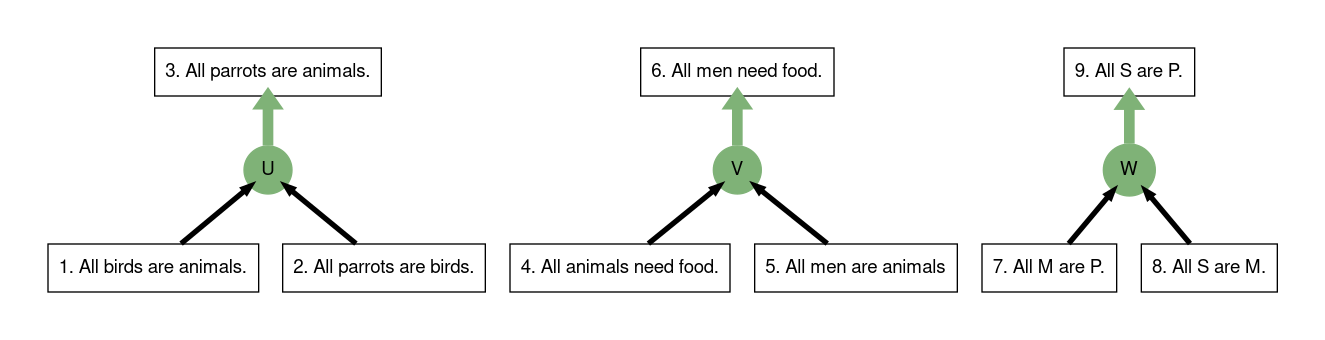
Barbara
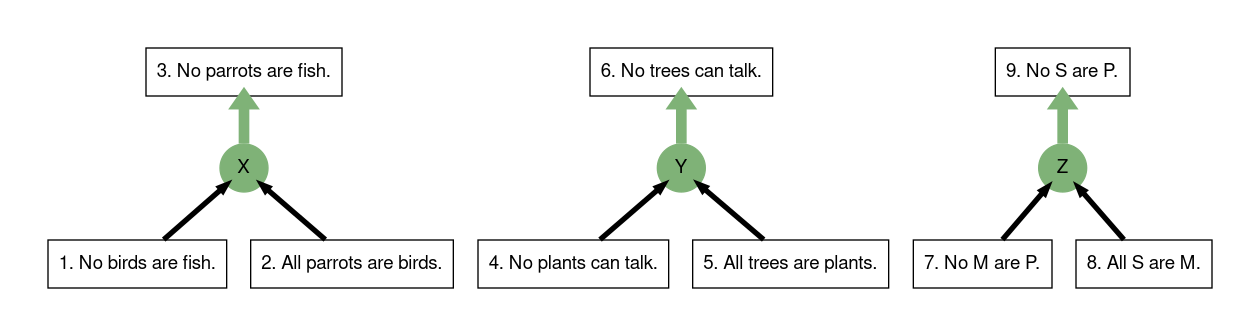
Celarent
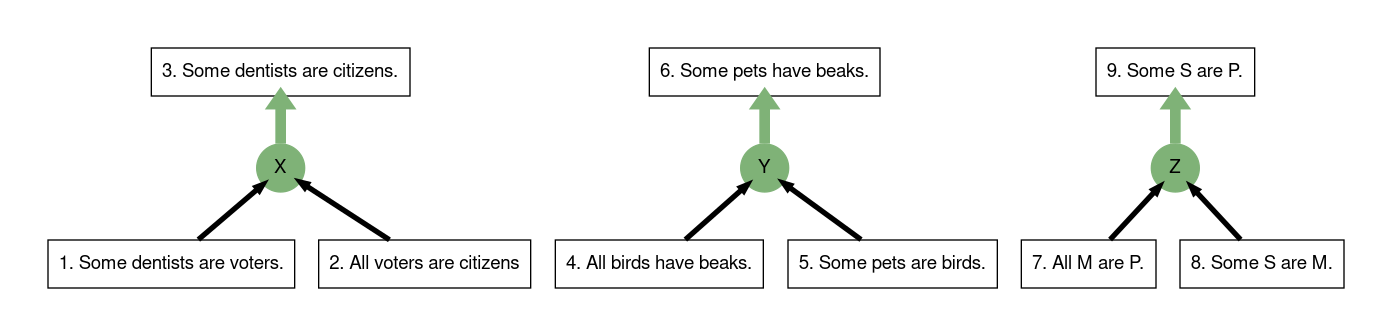
Darii
Ferio
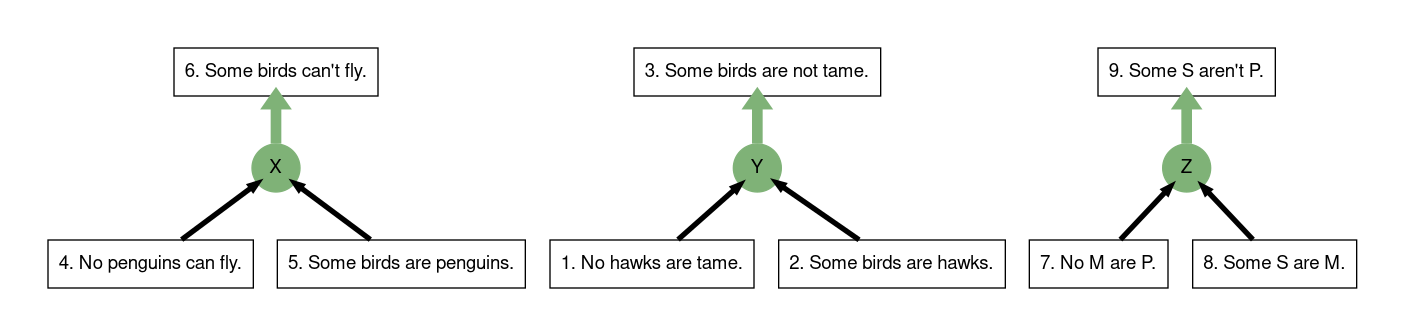
Other


Aristotle went through all possible combinations of two premises and a conclusion that could be made with propositions of the form “All/Some A are/aren’t B” and figured out which were valid deductions. It turned out that all of the valid forms could be restated in terms of the four that we’ve already looked at. Why, in each of these cases, do the premises necessitate the conclusion? It is because one premise is a universal proposition saying something about everything of a certain sort and the other premise tells us that something else is that sort of thing. The conclusion then applies the universal premise about all things of the sort to the thing that the other premise tells us is a member of that sort. If the universal premise is really true, and the thing in question really belongs to the relevant sort, then the universal premise will, of course, have to apply to that thing.

Though most deductive arguments involve the application of universal propositions to particular cases, not all do. Some, which were focused on by later Greek and Medieval logicians, involve the application of hypothetical statements to actual cases or the application of statements about alternative possibilities to cases in which some of the alternatives have been ruled out. Here are some examples:
| Map 28-29: |

|
| Map 30-31: |

|